
Resolving the Evolution of Gene Amplification in Cancer: From Molecular Through Cellular to Population Scales
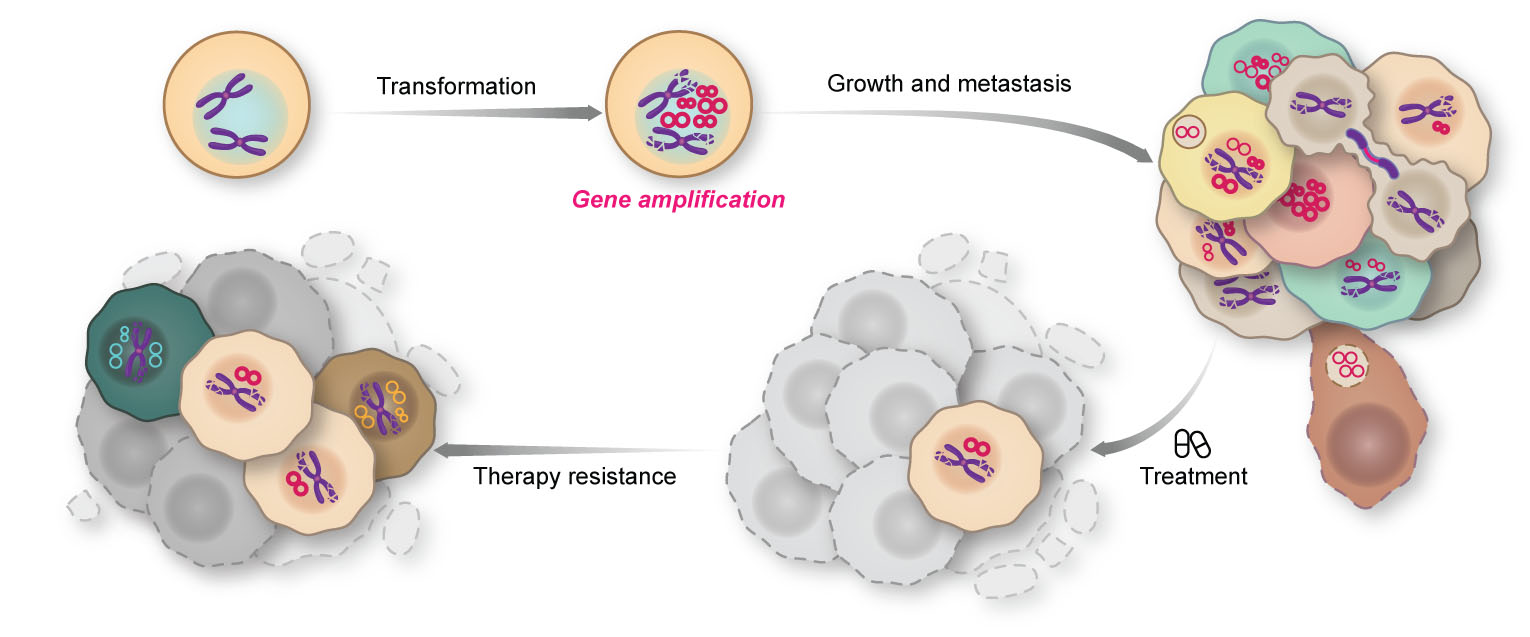
Dr. Ofer Shoshani at the Weizmann Institute of Science is studying how amplified DNA is evolving in cancer to devise strategies that target aggressive cancers and prevent therapy resistance.
For more than a century, scientists have known that chromosome abnormalities are a defining feature of cancer and play a major role in disease progression. Recent advances in DNA sequencing have revealed that many cancers undergo catastrophic genomic events in which chromosomes shatter and are reassembled, driving profound genetic changes. Our research has shown that these events strongly influence the evolution of gene amplification—an increase in copies of cancer-promoting genes that enables tumors to become more aggressive and resistant to therapy. Oncogene amplifications are common in the most lethal cancers, including those of the brain, breast, colon, and lung. The goal of this work is to gain a deep molecular understanding of how amplified DNA evolves in cancer. Using cutting-edge imaging, advanced DNA sequencing, and patient-derived organoid models, we will track amplified DNA from single molecules to entire tumor populations. This knowledge will support more informed clinical decision-making, advance personalized cancer care, and ultimately help identify new strategies to treat cancer more effectively.