
Host-Microbiota Interaction in Microscopic Colitis
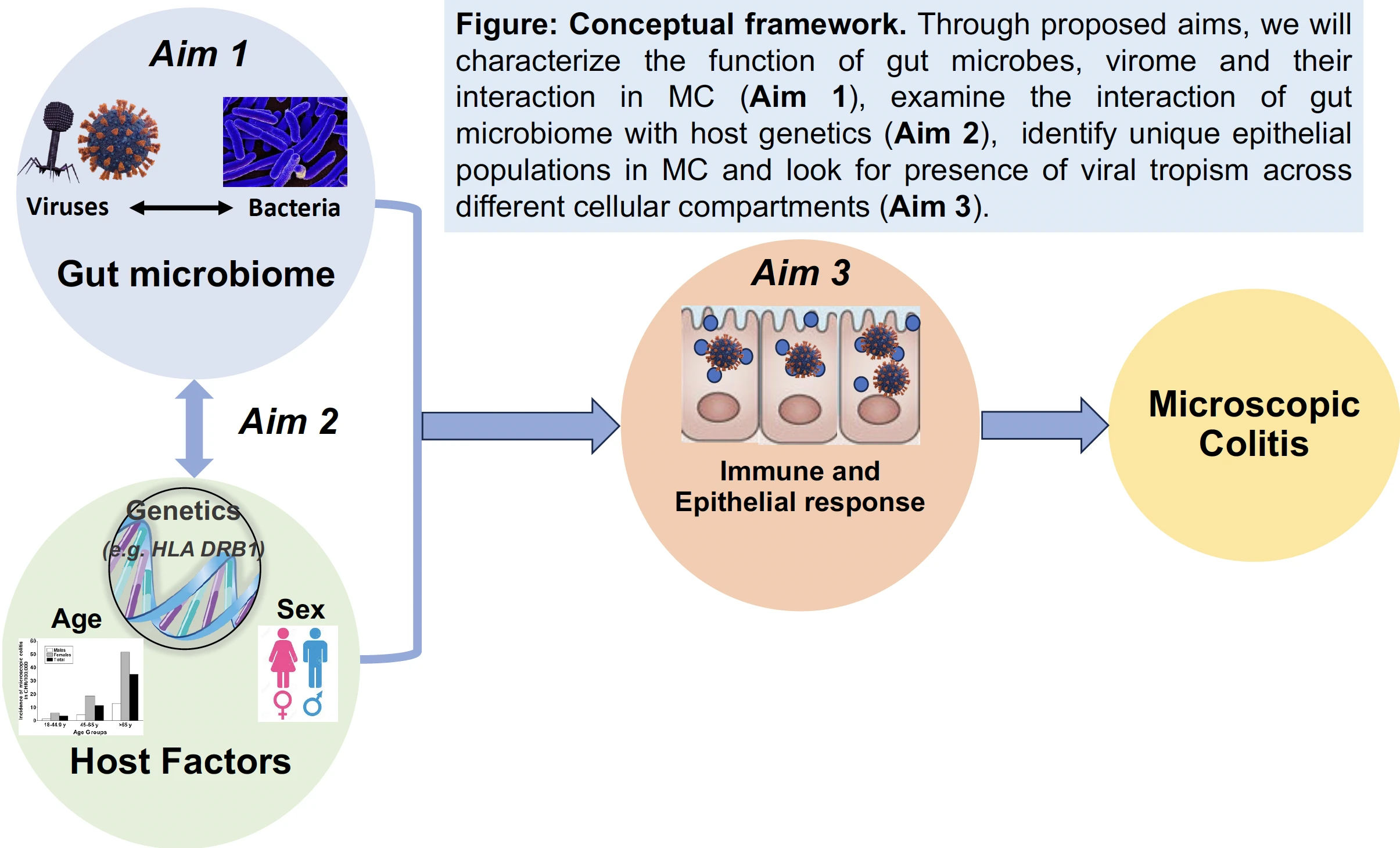
At Massachusetts General Hospital, Associate Professor Hamed Khalili aims to further characterize the functional potential of the gut microbiome in microscopic colitis (MC) through analysis of bacterial gene expression and profiling of the gut virome and to study host-gut microbiome interaction. This work has the potential to enhance our understanding of the pathogenesis of MC significantly.
Microscopic colitis (MC) is an inflammatory bowel disease of the large intestine that primarily affects older adults, in whom it accounts for more than 30% of cases of chronic diarrhea and fecal incontinence. The exact etiology of MC remains largely unknown, and there is currently no FDA-approved treatment, largely due to a limited understanding of its pathophysiology. Using their previously established longitudinal cohort of GI Disease and Endoscopy Register (GIDER), Dr. Khalili and his team have previously shown that the gut microbiome in MC is associated with significant enrichment of pro-inflammatory oral microbes and microbially derived pro-inflammatory metabolites. Support from the Bachrach Family Foundation will enable Dr. Khalili and his team to build on these findings and narrow the knowledge gap by investigating the inter-relationship between gut bacteria and viruses in MC. This work will improve the understanding of changes in the microbiome in MC and offer novel biomarkers and therapeutic targets for monitoring and treatment of MC.